
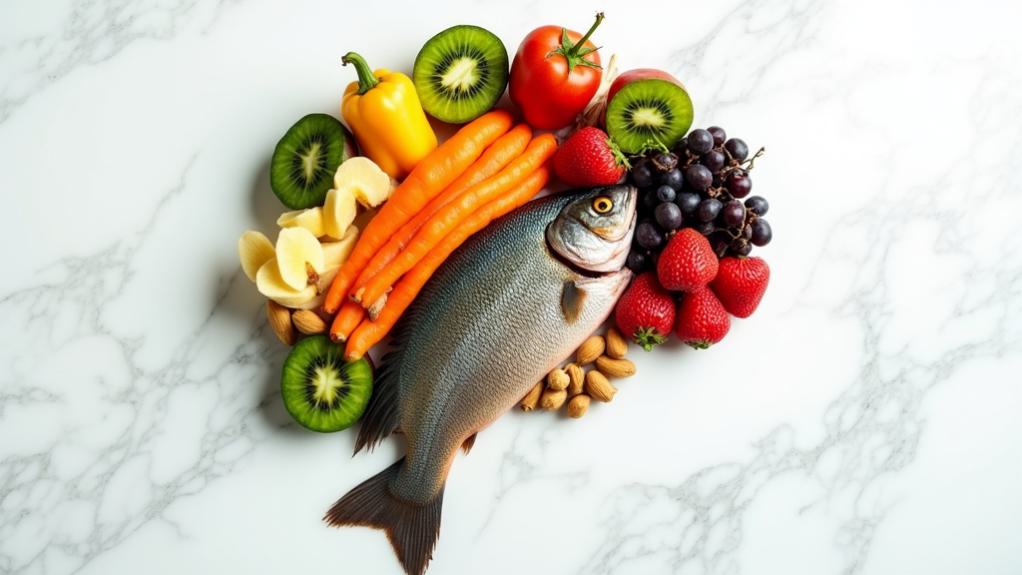
Nutrition and Mental Health: How Are They Connected?
Your nutrition choices directly affect your mental health through the brain-gut axis, a two-way communication system between your digestive system and brain. What you eat influences your mood, anxiety levels, and cognitive function by impacting neurotransmitter production and gut bacteria balance. Key nutrients like omega-3s, B-vitamins, and antioxidants play essential roles in maintaining emotional wellbeing. Understanding this connection can help you make informed dietary choices for better mental health.
The Brain-Gut Axis: Understanding the Connection
While scientists have long known about the connection between the brain and digestive system, recent research reveals just how profound this relationship truly is. Your gut contains millions of neurons that communicate directly with your brain through the vagus nerve, creating what’s called the brain-gut axis.
You’re not just what you eat – you’re how well your gut processes what you eat. When you’re feeling anxious, your gut responds. When your gut’s unhealthy, your mood suffers. This two-way communication means that supporting your gut health through proper nutrition directly impacts your mental wellbeing.
Key Nutrients That Support Mental Health
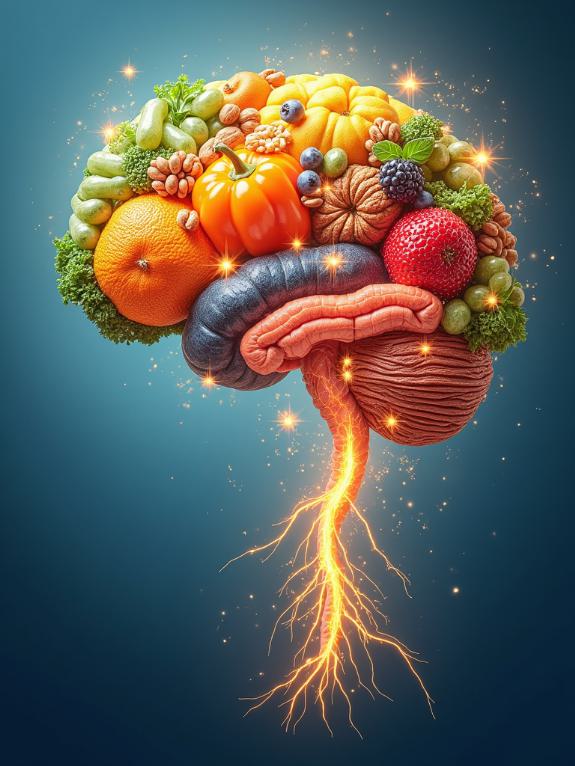
Ideal mental health relies on a foundation of essential nutrients that fuel your brain’s complex functions. You’ll want to focus on omega-3 fatty acids, found in fatty fish and walnuts, which help build and repair brain cells. B-vitamins, especially B12 and folate, support mood regulation and can reduce depression risk. Zinc and magnesium play significant roles in neurotransmitter function, while vitamin D helps protect against cognitive decline. Don’t forget about antioxidants from colorful fruits and vegetables – they shield your brain from oxidative stress. When you nourish your brain with these nutrients, you’re investing in your emotional wellbeing.
Foods That Boost Mood and Reduce Anxiety
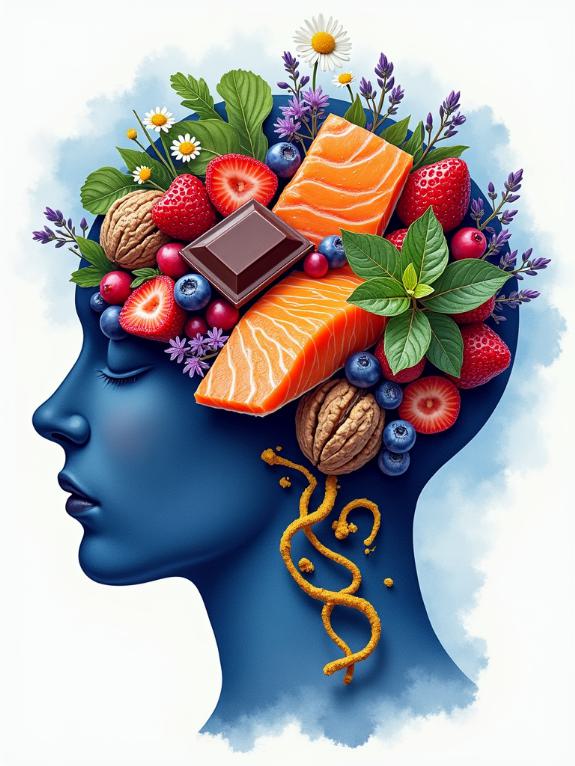
Specific foods act as natural mood enhancers, turning the nutrients we just explored into practical dietary choices. You’ll find mood-boosting power in fatty fish like salmon and mackerel, rich in omega-3s. Dark chocolate, loaded with antioxidants, can reduce stress hormones. Complex carbs in whole grains help produce serotonin, while fermented foods support gut health and emotional balance.
For anxiety relief, try calming chamomile tea and magnesium-rich pumpkin seeds. Don’t forget leafy greens, which provide folate for emotional stability. Berries pack antioxidants that fight stress-induced inflammation, while nuts offer zinc and healthy fats that nourish your brain.
How Poor Diet Affects Mental Wellbeing
Just as nutritious foods can elevate your mood, poor dietary choices can greatly impact your mental health. When you regularly consume processed foods, excessive sugar, and refined carbohydrates, you’re more likely to experience anxiety, depression, and mood swings. These foods create inflammation in your body and brain, disrupting the production of essential neurotransmitters.
You might notice that after eating junk food, you feel sluggish, irritable, and mentally foggy. This isn’t just in your head – research shows that high-sugar, low-nutrient diets can alter your brain chemistry, making you more susceptible to mental health challenges and emotional instability.
The Role of Gut Bacteria in Mental Health
Your gut bacteria play an essential role in regulating your mental health through what scientists call the gut-brain axis. These microorganisms produce neurotransmitters like serotonin and dopamine, which directly influence your mood and behavior.
When you maintain a diverse gut microbiome through healthy eating, you’re supporting your mental wellbeing. Your beneficial bacteria thrive on fiber-rich foods and fermented products, while processed foods and excess sugar can harm them. The foods you choose literally shape your microbial community, which in turn affects your anxiety levels, stress response, and overall mental clarity.
Creating a Mental Health-Focused Meal Plan
Armed with knowledge about gut bacteria’s impact on mental health, designing an effective meal plan becomes the next logical step. You’ll want to start by incorporating probiotic-rich foods like yogurt, kimchi, and kombucha into your daily routine. Add plenty of fiber through whole grains, legumes, and vegetables to feed those beneficial gut bacteria.
Include omega-3 fatty acids from salmon and walnuts, along with leafy greens rich in folate. Don’t forget to add lean proteins and complex carbohydrates to stabilize your mood throughout the day. Remember to eat regularly and stay hydrated – your brain needs consistent fuel to function efficiently.
Research Findings: Diet’s Impact on Depression
Scientific studies have consistently shown a strong connection between dietary choices and depression symptoms. You’ll find that diets rich in processed foods and sugar increase your risk of depression by up to 60%, while Mediterranean-style eating patterns can reduce symptoms by 30%.
Research reveals that you’re not alone in experiencing mood changes related to food choices. Your brain needs specific nutrients like omega-3s, B vitamins, and zinc to produce mood-regulating neurotransmitters. Studies show that when you eat these nutrients regularly through whole foods, you’re more likely to maintain stable mental health and experience fewer depressive episodes.
Strategies for Long-Term Dietary Changes
Understanding the link between diet and mental health is only part of the journey – implementing lasting changes to your eating habits requires practical strategies and dedication. You’ll find success by starting small: swap one processed snack for fresh fruit, or replace soda with water. Create a supportive environment by keeping nutritious foods visible and accessible. Connect with others who share your goals through cooking classes or online communities. Plan your meals ahead, and don’t be too hard on yourself when you slip up – it’s about progress, not perfection. You’re building a healthier relationship with food, one choice at a time.