Guided Meditation Techniques for Healthy Aging in Seniors
Guided meditation can greatly improve your aging journey by strengthening neural pathways and reducing stress hormones. You’ll benefit from simple breathing techniques like the 4-4-4 breath and belly breathing, which promote relaxation and mental clarity. Start with a comfortable chair or cushion, and use a timer to maintain focused sessions. Body scan meditations can help manage pain while boosting cognitive function. Discover how these practical techniques can enhance your daily well-being.
Understanding the Science Behind Meditation and Aging
While aging naturally affects cognitive function and stress levels, research shows that meditation can help counteract these changes in the brain. When you meditate regularly, you’ll strengthen neural pathways and increase gray matter density in areas responsible for memory, emotional regulation, and self-awareness. Your brain’s neuroplasticity remains active throughout life, allowing you to build new connections.
You’re not alone in experiencing age-related changes. Like many others in your community, you can benefit from meditation’s proven ability to reduce cortisol levels, lower blood pressure, and improve focus. These scientific findings demonstrate why meditation has become a valuable tool for healthy aging.
Getting Started: Essential Tools and Equipment for Senior Meditation
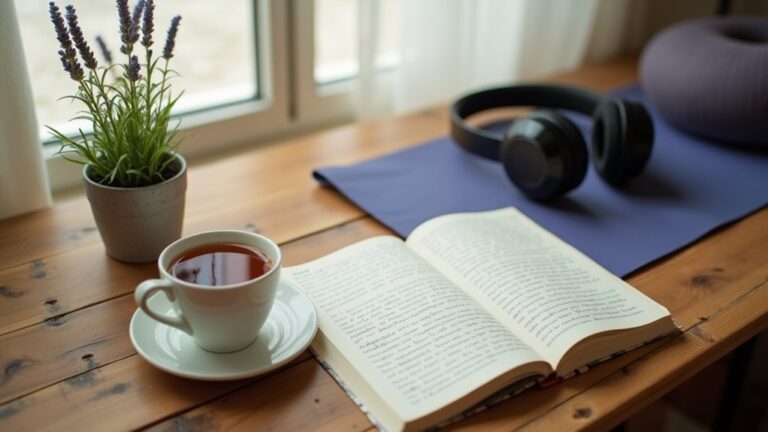
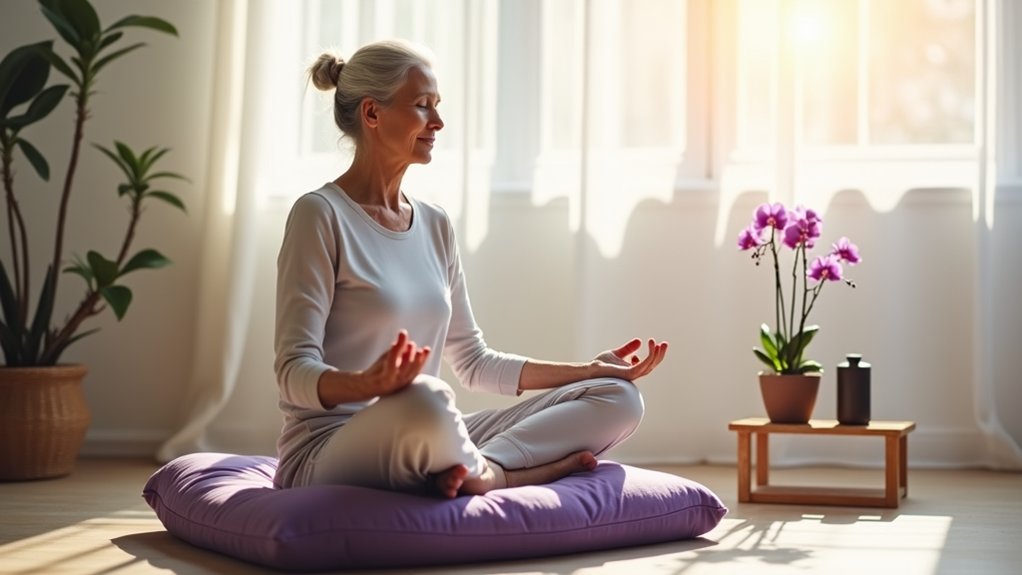
Although meditation requires minimal equipment, having a few essential items will help make your practice more comfortable and sustainable. You’ll want a supportive cushion or chair that keeps your spine aligned, and a timer to maintain focused sessions without watching the clock. Consider using a soft blanket to stay warm during longer sits.
For guided practice, you’ll need a reliable audio device and headphones. Many seniors find meditation apps helpful for tracking progress. Optional items include a meditation bench, yoga mat for floor sitting, and aromatherapy diffuser to create a calming environment that you’ll look forward to visiting each day.
Simple Breathing Techniques for Beginners
Since breathing forms the foundation of meditation practice, mastering a few basic techniques will help you build confidence as a beginner. Start with the 4-4-4 breath: inhale for four counts, hold for four counts, then exhale for four counts. You’ll feel more centered with each cycle.
Next, try belly breathing. Place your hand on your stomach and breathe deeply so your belly expands outward. When you exhale, let your belly fall naturally. This technique helps you relax and connect with your body’s natural rhythm.
Body Scan Meditation for Pain Management and Relaxation
The body scan meditation offers three key benefits for seniors: pain relief, deep relaxation, and increased body awareness. You’ll start by finding a comfortable position, either lying down or sitting in a supportive chair. Close your eyes and bring your attention to your toes, gradually moving up through each part of your body. Notice any sensations – warmth, coolness, tension, or ease. Don’t judge these feelings; simply observe them. When you reach discomfort or pain, breathe into that area with gentle acceptance. Many seniors find that this practice helps reduce chronic pain and promotes better sleep.
Mindfulness Practices to Enhance Mental Clarity and Memory
By maintaining consistent mindfulness practices, you can greatly boost your cognitive function and memory retention as you age. Start by focusing on your breath for 5-10 minutes daily, noting each inhale and exhale. When thoughts arise, acknowledge them without judgment and return to your breath.
Try incorporating simple memory exercises into your mindfulness routine. As you meditate, mentally list items in your environment, recall details from your morning, or count backward. You’ll find these practices strengthen your ability to stay present and alert throughout the day while building neural pathways that support better memory function.
Creating a Sustainable Daily Meditation Routine
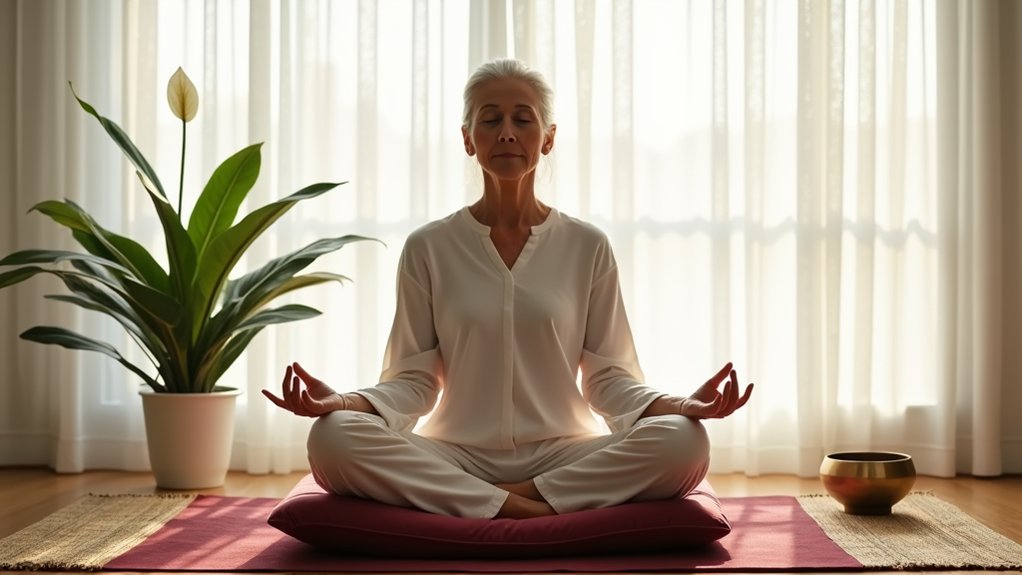
Making meditation a daily habit doesn’t need to feel overwhelming or time-consuming. You can easily integrate mindfulness into your existing routine by choosing a specific time that works best for you, whether it’s morning, afternoon, or evening. Join fellow seniors in creating a peaceful meditation space that feels inviting and comfortable.
- Picture yourself sitting in your favorite chair, surrounded by soft natural light streaming through your window
- Envision a cozy corner with a small table holding a gentle-scented candle and your favorite cushion
- Imagine the calming sound of a meditation bell or gentle music playing softly in the background
Start with just five minutes daily and gradually extend your practice as you feel ready.