

Managing Anxiety in Older Adults: Tips for Caregivers
If you’re caring for an anxious older adult, start by creating a calm, predictable environment with established routines and clutter-free spaces. Keep communication clear and empathetic, validating their concerns while maintaining a reassuring tone. Help them stay active with gentle exercise and encourage social connections through community activities. Watch for physical symptoms like muscle tension or sleep changes, and establish consistent daily schedules. Understanding the full scope of anxiety management can transform your caregiving approach.
Recognizing Anxiety Symptoms in Older Adults
Anxiety in older adults often manifests differently than in younger people, making it challenging to identify. You’ll want to watch for physical symptoms like muscle tension, shortness of breath, and digestive issues. Look for changes in their sleep patterns or increased fatigue.
Pay attention to behavioral changes too. Your loved one might become irritable, withdraw from social activities, or express excessive worry about routine matters. They may repeatedly ask the same questions about safety or health concerns. Sometimes they’ll try to mask their anxiety by focusing on physical complaints rather than emotional distress.
Common Triggers and Risk Factors
While each older adult’s experience is unique, several common factors can trigger or worsen anxiety in seniors. Major life changes like retirement, losing a spouse, or moving from their home can deeply affect their sense of security. Health concerns, chronic pain, and reduced mobility often lead to increased worry and stress.
You’ll find that medication side effects, financial pressures, and feelings of isolation can also contribute to anxiety. Family conflicts or changing roles within relationships may trigger emotional distress. Additionally, a history of trauma or previous mental health challenges can make older adults more vulnerable to anxiety in their later years.
Creating a Supportive Environment
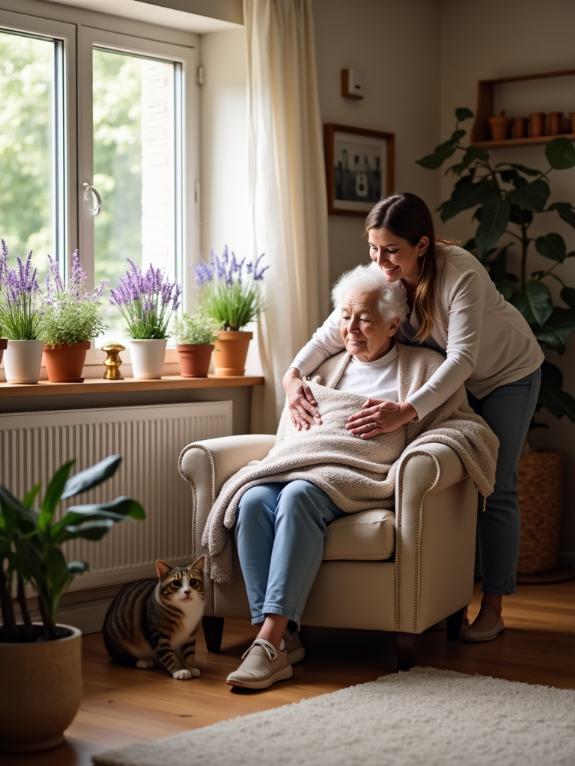
Because a calm and structured environment can greatly influence mental well-being, it is essential to create spaces that promote peace and security for older adults with anxiety. You’ll want to focus on establishing predictable routines and maintaining a clutter-free living space that feels familiar and safe.
Creating a peaceful environment and maintaining familiar routines helps older adults feel more secure and reduces anxiety-triggering situations.
- Set up a dedicated relaxation area with comfortable seating, soft lighting, and calming elements like plants or nature photos
- Organize daily items within easy reach and maintain clear pathways to reduce frustration and fall risks
- Install proper lighting and nightlights to minimize shadows and help prevent confusion during evening hours
Effective Communication Strategies
Since anxiety often heightens sensitivity to communication, knowing how to interact effectively with older adults can make a significant difference in their emotional well-being. When you’re speaking with an anxious older adult, maintain eye contact and use a calm, reassuring tone. Let them express their concerns without interruption, and validate their feelings rather than dismissing them. Keep your messages clear and simple, avoiding complex explanations that might increase confusion. Remember to be patient and give them time to process information. You’ll build trust by showing genuine interest and responding with empathy to their worries.
Lifestyle Changes and Coping Techniques
As older adults face anxiety, making strategic lifestyle changes can greatly reduce their symptoms and improve overall well-being. You’ll find that implementing routine adjustments can help your loved one feel more secure and in control of their environment.
- Establish consistent sleep patterns by setting regular bedtimes and creating a calming nighttime routine
- Incorporate gentle exercise like walking, swimming, or chair yoga into their daily schedule
- Encourage social connections through community groups, family visits, or hobby clubs that match their interests
When to Seek Professional Help
While lifestyle changes can greatly help manage anxiety in older adults, recognizing when professional intervention is necessary remains essential.
You’ll want to seek help if your loved one shows persistent anxiety symptoms that interfere with daily activities, sleep, or relationships. Watch for signs like constant worrying, restlessness, difficulty concentrating, or physical symptoms that last more than two weeks. If they express thoughts of self-harm or show significant personality changes, don’t wait – contact a healthcare provider immediately.