
Brain Health Exercises for Seniors: What Are Your Options?
You’ve got many engaging options to keep your brain sharp as you age. Try digital brain training apps like Lumosity, tackle traditional puzzles and memory games, or join social activities like book clubs and bridge groups. Physical exercises, including walking and tai chi, boost brain health through improved blood flow. Mindfulness practices and creative arts further enhance cognitive function. Exploring these diverse activities will open up new pathways to mental well-being.
Understanding Brain Health: Why Exercise Matters
While aging naturally affects cognitive function, regular brain exercises can help maintain mental sharpness and slow cognitive decline. You’re not alone in wanting to keep your mind active and engaged as you age. Your brain’s remarkable ability to form new neural connections, known as neuroplasticity, doesn’t stop in your later years.
When you challenge your brain with new activities and mental exercises, you’re strengthening these neural pathways. Think of it like maintaining a garden – the more you tend to it, the better it grows. By staying mentally active, you’ll boost your memory, problem-solving skills, and overall cognitive performance.
Digital Brain Training Apps and Programs
Although traditional brain exercises remain valuable, modern technology offers convenient digital alternatives for cognitive training. You’ll find popular apps like Lumosity, Peak, and CogniFit that provide engaging ways to challenge your mind. These platforms offer personalized training programs targeting memory, attention, problem-solving, and processing speed.
Many senior communities have embraced these digital tools, making it easier to connect with others while maintaining cognitive fitness. You can track your progress, compete with friends, and join online groups of like-minded individuals. Several apps even offer free versions, so you can try them before committing to a subscription.
Traditional Puzzles and Memory Games
Despite the rise of digital alternatives, traditional puzzles and memory games remain powerful tools for maintaining cognitive function. You’ll find comfort in familiar favorites like crosswords, jigsaw puzzles, and card games that have stood the test of time.
Try classic memory games like “concentration” with a standard deck of cards, or challenge yourself with Sudoku puzzles in your morning paper. These activities aren’t just entertaining—they’re social opportunities too. Gather with friends for weekly bridge games or join a local chess club. You’ll sharpen your mind while building meaningful connections with others who share your interests.
Social Activities That Boost Cognitive Function
Since regular social interaction plays a vital role in maintaining cognitive health, you’ll want to prioritize activities that combine mental stimulation with human connection. Join your local community center or senior group to engage in mentally stimulating social activities that keep your brain sharp while building meaningful relationships.
Social engagement paired with mental exercise offers a powerful way to maintain cognitive vitality while fostering meaningful bonds with others.
- Book clubs that encourage lively discussions and diverse perspectives, helping you explore new ideas while connecting with fellow readers
- Group bridge or chess meetups that challenge your strategic thinking and create lasting friendships
- Community theater groups that exercise memory through script learning while fostering teamwork and creative expression
Physical Exercises That Enhance Brain Power
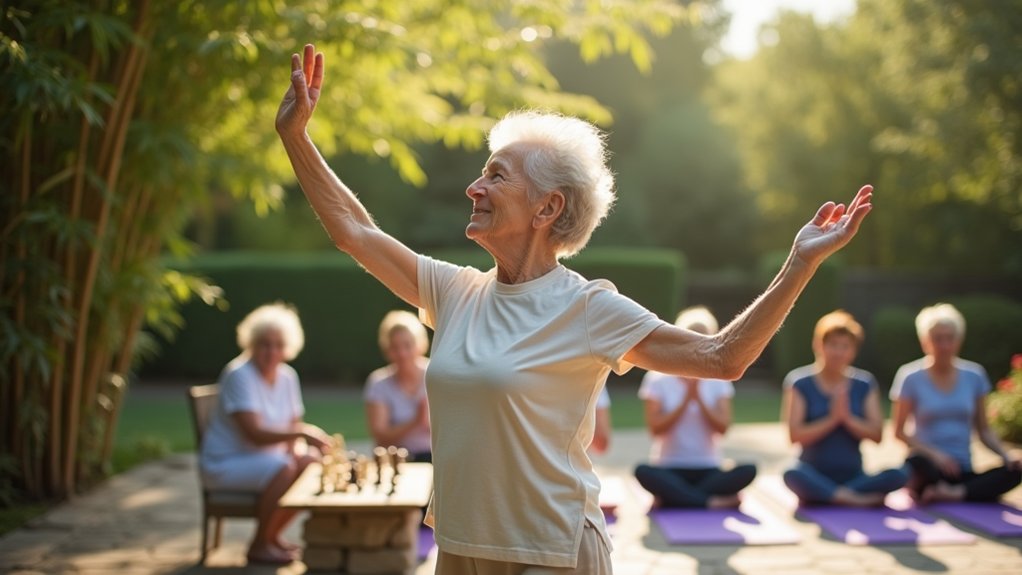
While mental exercises are essential for brain health, physical activity also plays an important role in maintaining cognitive function as you age. You’ll find that walking, swimming, and dancing are excellent low-impact exercises that boost blood flow to your brain. By joining a tai chi or yoga class, you’ll improve both balance and mental clarity while connecting with others who share your wellness goals. Don’t forget to try coordination exercises like tennis or ping-pong, which strengthen your brain-body connection. Even gardening counts – it combines gentle movement with planning skills that keep your mind sharp.
Mindfulness and Meditation Techniques
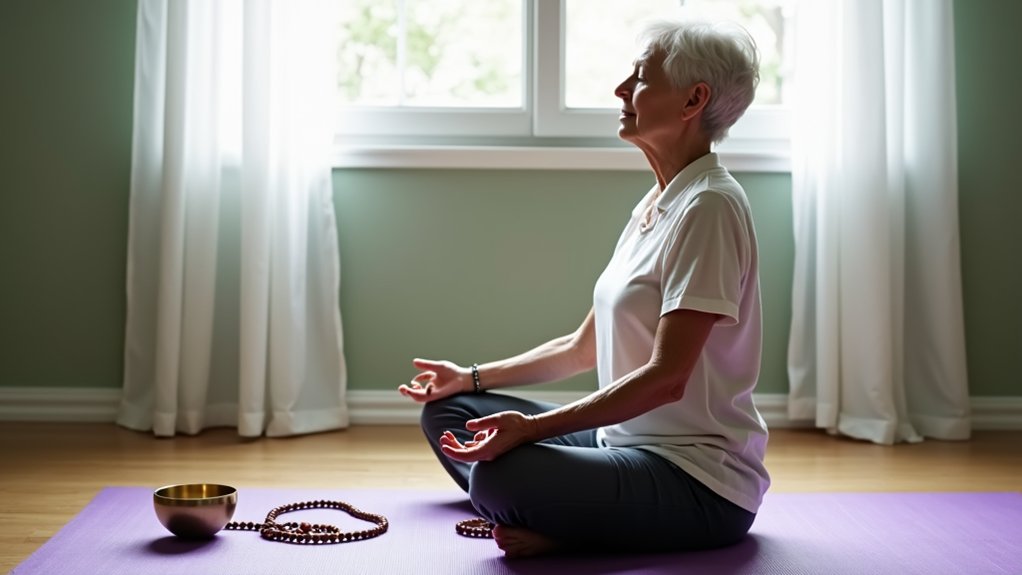
Physical exercise strengthens your body, and mindfulness strengthens your mind. When you practice meditation and mindfulness, you’re joining millions of seniors who’ve discovered these powerful tools for maintaining mental clarity and emotional balance. These ancient practices have modern scientific backing, showing they can reduce stress, improve memory, and enhance overall cognitive function.
- Start with just 5 minutes of focused breathing each day, gradually increasing to 20 minutes
- Try guided meditation apps designed specifically for seniors
- Join local meditation groups to learn proper techniques and connect with others
Like any skill, mindfulness becomes easier with regular practice, and you’ll notice improvements in your daily life.
Creative Arts and Brain Stimulation
Engaging in creative arts offers seniors one of the most enjoyable ways to maintain cognitive health. You’ll find that painting, drawing, or sculpting challenges your brain to process visual information and make creative decisions. These activities strengthen neural pathways and enhance hand-eye coordination.
You can also boost your brain power through music. Whether you’re learning to play an instrument, singing in a choir, or dancing to your favorite tunes, you’re activating multiple brain regions simultaneously. Join a local art class or music group to combine creative expression with social interaction, giving your brain a double benefit.
Building Your Daily Brain Exercise Routine
To maintain ideal brain health, you’ll need a consistent routine that combines various mental exercises throughout your day. Start by scheduling brain-boosting activities when you’re most alert, and join others in your community who share similar goals.
- Choose 2-3 different cognitive exercises daily, like crosswords in the morning, language learning at lunch, and memory games before dinner
- Partner with friends for brain-training activities to stay accountable and make it more enjoyable
- Mix physical exercise with mental challenges by taking group walking tours, learning new dance steps, or practicing tai chi