Yoga for Stress Relief: How Can It Transform Your Well-Being?
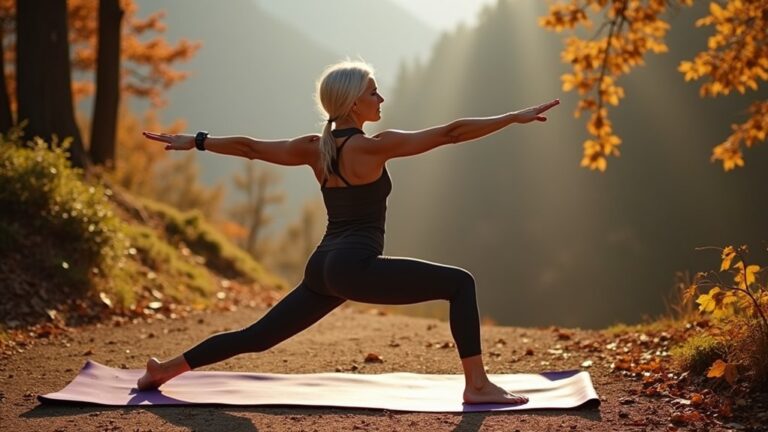
You’ll find powerful stress relief through yoga’s scientifically proven combination of gentle movement and mindful breathing. When you practice poses like Child’s Pose and Forward Fold while engaging in deep breathing techniques, your body activates its natural relaxation response, lowering cortisol levels and heart rate. Regular practice strengthens your mind-body connection, improves sleep quality, and enhances emotional regulation. Discover how this ancient practice can transform your daily well-being into a more balanced state.
Understanding the Science Behind Yoga and Stress Reduction
When you practice yoga, your body initiates several physiological responses that directly combat stress. Your parasympathetic nervous system activates, lowering cortisol levels and heart rate while increasing feel-good hormones like serotonin and GABA. As you move through poses and focus on breathing, you’re triggering your body’s relaxation response.
You’ll notice your brain waves shifting from beta to alpha patterns, similar to what happens during meditation. This scientific process explains why you feel more centered and peaceful after yoga. Your mind-body connection strengthens as yoga regulates your autonomic nervous system, helping you build resilience against daily stressors.
Essential Yoga Poses for Instant Stress Relief
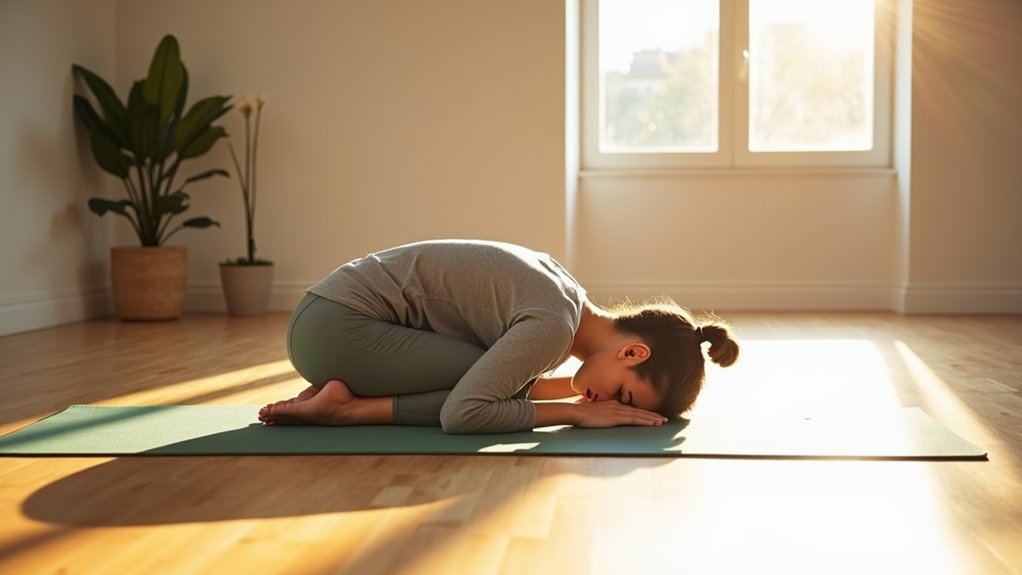
Now that you understand how yoga affects your body and mind, let’s explore specific poses that offer immediate stress relief. Start with Child’s Pose, where you’ll feel instant calm as you fold forward and release tension. Move into Cat-Cow stretches to create a gentle flow that soothes your spine and nervous system. Practice standing Forward Fold to let your head hang heavy, melting away stress. Finally, try Legs-up-the-Wall pose, which naturally triggers your relaxation response. You’ll join thousands who’ve discovered these simple yet powerful poses as their go-to stress solutions.
Breathing Techniques to Calm Your Mind
Breathing lies at the heart of any effective yoga practice for stress management. You’ll discover three powerful techniques to help you find inner peace: alternate nostril breathing, deep belly breathing, and the calming ocean breath.
Start with alternate nostril breathing by closing one nostril at a time while you inhale and exhale. Deep belly breathing involves placing your hand on your stomach and feeling it rise with each breath. For ocean breath, slightly constrict your throat to create a soft, wave-like sound as you breathe.
Practice these techniques for 5-10 minutes daily to reduce anxiety and bring clarity to your mind.
Creating a Sustainable Home Practice Routine
To build a lasting yoga practice that sticks, you’ll need more than just good intentions – you’ll need a realistic routine that fits your lifestyle. Start by choosing a specific time of day when you’re most likely to follow through, whether it’s early morning or during your lunch break.
Set up a dedicated space in your home where you can roll out your mat without obstacles. Begin with just 10-15 minutes daily rather than ambitious hour-long sessions. As you progress, you can gradually extend your practice time.
Connect with other home practitioners through online communities to stay motivated and accountable. Remember, consistency matters more than perfection.
Mind-Body Connection: The Role of Meditation in Yoga
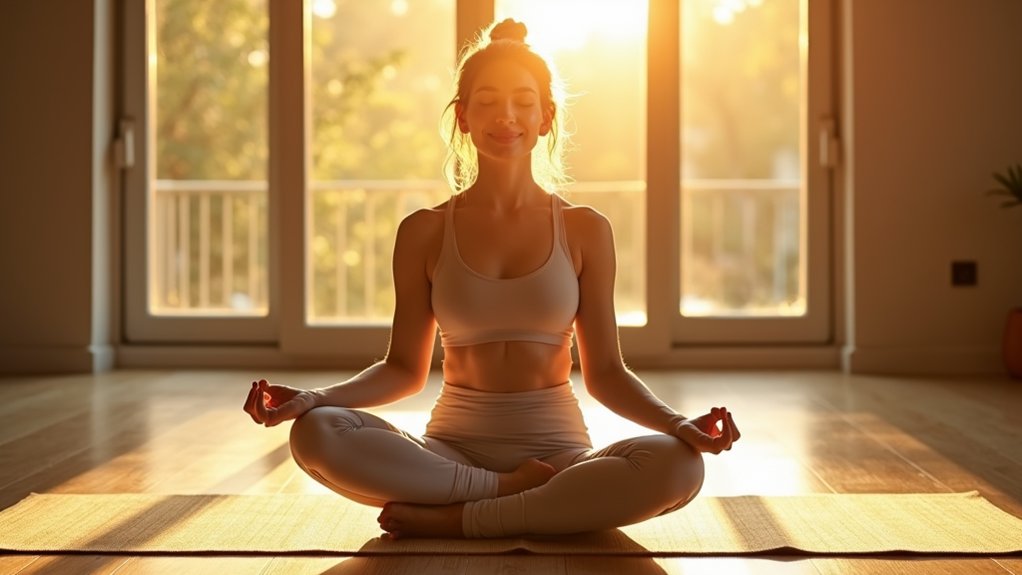
While many people view yoga primarily as a physical practice, meditation serves as its spiritual cornerstone, uniting mind and body through mindful awareness. As you breathe deeply and focus your attention inward, you’ll notice thoughts and sensations without judgment. This mindful approach helps you stay present, reducing anxiety about the future and regrets about the past.
You don’t need to sit for hours to experience meditation’s benefits. Just 5-10 minutes of quiet reflection during your yoga practice can help you develop greater self-awareness, emotional balance, and mental clarity. You’ll discover that regular meditation naturally enhances your yoga journey.
Physical and Mental Benefits of Regular Practice
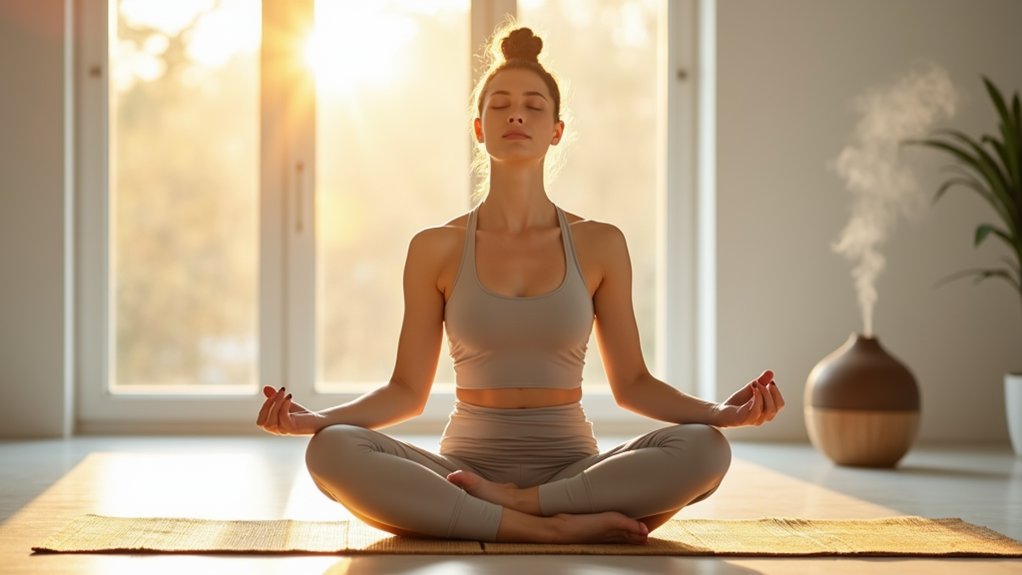
Regular yoga practice delivers a powerful combination of physical and mental rewards that can transform your daily life. You’ll notice improved flexibility, stronger muscles, better posture, and enhanced balance. Your breathing becomes deeper, boosting oxygen flow throughout your body and calming your nervous system.
Mentally, you’ll experience reduced anxiety, clearer thinking, and better emotional regulation. Your sleep quality improves as stress hormones decrease, while your body releases more feel-good endorphins. You’ll join millions who’ve discovered increased self-awareness and inner peace through consistent practice. These benefits compound over time, creating lasting positive changes in your overall well-being.