Top 10 Personalized Health Coaching Tips for Retirees
You’ll optimize your retirement wellness by starting with a thorough health assessment and setting achievable goals. Focus on low-impact exercises like walking or swimming, while following a nutrient-rich meal plan tailored to your needs. Practice stress management through activities like yoga or meditation, and build a supportive network of workout buddies. Don’t forget to track your progress weekly and adjust your routine. These foundational steps open the door to a more extensive wellness journey.
Assess Your Current Health Status and Set Realistic Goals

Before starting on any new health journey during retirement, you’ll need to take an honest look at your current physical condition and capabilities. Schedule a thorough check-up with your doctor to understand your baseline health metrics, including blood pressure, cholesterol, and bone density.
Write down specific health goals that matter to you, whether it’s maintaining independence, playing with grandchildren, or traveling. Remember, you’re joining many other retirees who are taking charge of their wellness. Break larger goals into smaller, achievable steps. Track your progress weekly, and don’t hesitate to adjust your goals as needed. You’re commencing on an empowering path to better health.
Create a Customized Exercise Routine That Fits Your Mobility Level
When designing your retirement exercise routine, it’s essential to match activities with your current mobility and fitness capabilities. Start with low-impact exercises like walking, swimming, or chair yoga that won’t strain your joints. As you gain strength, gradually incorporate resistance training using light weights or resistance bands.
Join senior fitness classes at your local community center where you’ll meet peers who share your wellness goals. You’ll benefit from expert guidance while building a supportive network. Remember to include balance exercises and stretching in your routine to prevent falls and maintain flexibility. Always listen to your body and adjust intensity as needed.
Design a Nutrient-Rich Meal Plan for Your Dietary Needs
Physical activity works best when paired with proper nutrition to support your retirement wellness goals. You’ll want to focus on nutrient-dense foods that fuel your body and mind. Start by incorporating colorful fruits and vegetables, lean proteins, and whole grains into your daily meals.
Consider your specific health needs, such as managing blood pressure or blood sugar. Work with your doctor to identify any dietary restrictions. Then, plan your weekly menu around these guidelines. You can join local cooking classes or meal-planning groups to learn new recipes and connect with others who share your health interests. Remember to stay hydrated throughout the day.
Develop Stress Management Techniques That Work for You
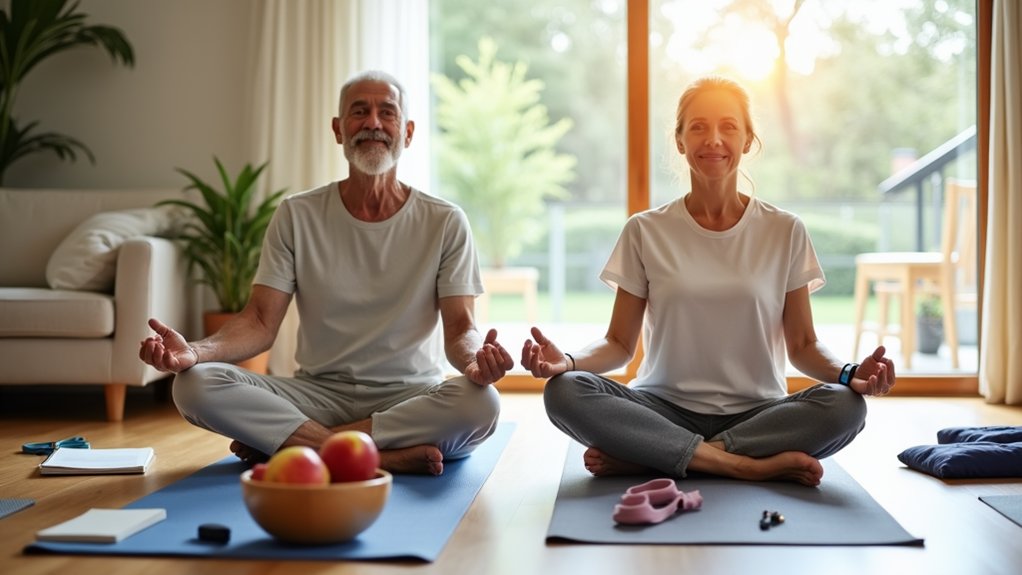
Although retirement brings newfound freedom, it can also introduce unique stressors that affect your well-being. You’ll find peace by choosing stress management techniques that resonate with your lifestyle. Try gentle yoga or tai chi to connect mind and body while improving balance. Join a meditation group where you can practice mindfulness with others who share your journey.
When feeling overwhelmed, step into nature for a calming walk, or engage in deep breathing exercises. Consider joining a senior stress management workshop to learn from others’ experiences. Remember, what works for your neighbor might not work for you – it’s about discovering your personal path to tranquility.
Build a Support Network for Accountability and Motivation
Managing stress becomes easier when you’re not doing it alone, which brings us to the power of social connections in retirement.
Join local fitness groups or walking clubs where you’ll meet others who share your wellness goals. Consider partnering with a workout buddy who can keep you accountable for your exercise routine. You’ll find that scheduled activities with friends make you more likely to follow through.
Don’t hesitate to connect with fellow retirees through community centers, volunteer programs, or health-focused meetups. Creating a network of supportive relationships won’t just boost your motivation—it’ll enrich your retirement journey and make healthy living more enjoyable.
Track Your Progress With Technology and Traditional Methods

Since tracking your health journey provides valuable insights, it is essential to find methods that work best for you. You’ll discover a mix of digital and traditional tracking tools to monitor your progress effectively. Try user-friendly fitness apps and smartwatches to record steps, heart rate, and sleep patterns. If you prefer pen and paper, maintain a wellness journal to document daily activities, meals, and mood.
Join other retirees who combine both approaches – using apps for exercise tracking while keeping handwritten food diaries. Remember to regularly review your data, celebrate small wins, and adjust your goals based on the trends you observe.
Adapt Your Sleep Routine for Optimal Rest and Recovery
While your daily activity levels influence your health, quality sleep remains the cornerstone of wellbeing during retirement. You’ll find that creating a consistent sleep schedule helps regulate your body’s natural rhythm. Set your bedroom temperature between 60-67°F and minimize light exposure before bedtime.
Many of your fellow retirees have discovered that gentle stretching or meditation before bed enhances sleep quality. If you’re struggling to fall asleep, don’t stay in bed tossing and turning – instead, get up and do a calm activity until you feel sleepy. Remember, your evening routine should be relaxing and free from screens at least an hour before bedtime.
Balance Social Activities With Personal Wellness Time
As you settle into retirement, striking the right balance between social engagement and personal downtime becomes essential for your overall wellbeing. Schedule regular coffee dates, book clubs, or volunteer activities to maintain meaningful connections, but don’t overcommit. Listen to your body and honor when you need quiet time for meditation, reading, or simply relaxing.
Create boundaries by blocking out specific times for both social activities and self-care. Let friends know when you’re taking personal wellness days, and they’ll likely respect your need for balance. Remember, meaningful social connections enhance your health, but personal recharge time is equally crucial for maintaining energy and emotional resilience.
Modify Activities to Maintain Independence and Safety
Maintaining your independence often requires smart adaptations to daily activities as your physical capabilities evolve. Consider installing grab bars in your bathroom, using a shower chair, and adding non-slip mats to prevent falls. You’ll find it helpful to rearrange kitchen items to waist-level shelves and use tools like jar openers or electric can openers.
Join other retirees in exercise classes designed for seniors, where you’ll learn safe modifications for traditional movements. When gardening, try raised beds or vertical gardens. For household tasks, break them into smaller segments and use ergonomic tools that fellow retirees recommend.
Schedule Regular Health Check-ins and Adjustments
Because health needs evolve during retirement, you’ll want to establish a consistent schedule for medical check-ups and wellness reviews. Stay connected with your healthcare team to track changes in your physical and mental well-being. Join other retirees who prioritize their health through regular monitoring and proactive care.
Maintaining regular health check-ups during retirement helps you stay ahead of changing medical needs and ensures optimal wellness throughout your golden years.
- Schedule quarterly check-ins with your primary care physician
- Track your essential signs and medications using a health journal
- Meet with a nutritionist twice yearly to adjust your diet plan
- Book annual screenings for vision, hearing, and bone density
- Participate in monthly wellness assessments at your local senior center