Effective Exercise Plans for Senior Wellness Coaching
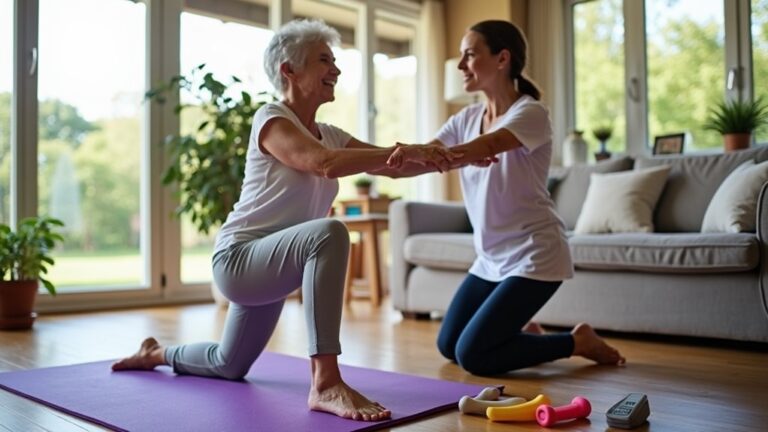
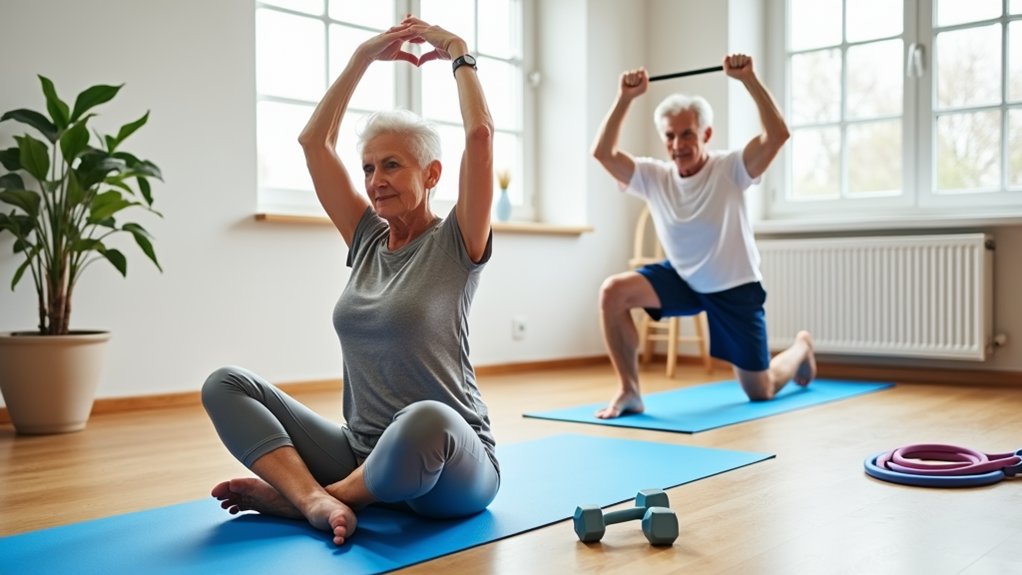
You’ll want to begin your senior fitness journey with a thorough assessment and realistic goal-setting process. Start with low-impact cardio like walking or swimming for 10-15 minutes, then gradually build to 30 minutes. Include basic strength training using bodyweight exercises and resistance bands, plus balance work to prevent falls. Track your progress with a workout diary and find exercise buddies for support. The path to improved wellness becomes clearer with each step forward.
Understanding Senior Fitness Assessment and Goal Setting
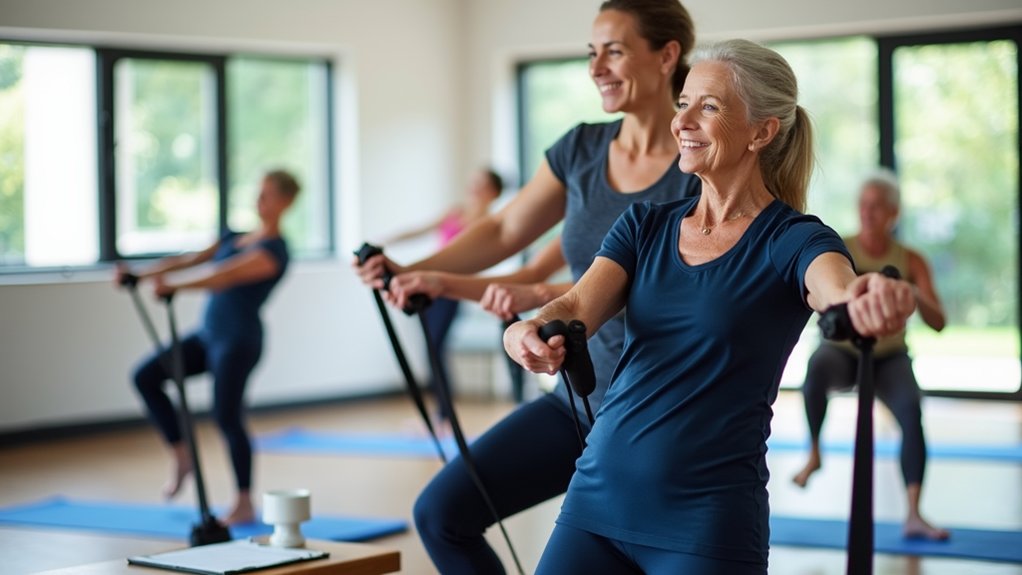
Before diving into any exercise program, seniors should undergo an extensive fitness assessment to establish a safe and effective starting point. You’ll work with your healthcare provider to evaluate your current abilities, medical conditions, and physical limitations.
Once you’ve completed your assessment, you can set realistic, achievable goals that align with your lifestyle and interests. Whether you’re aiming to improve balance, increase strength, or enhance mobility, your goals should be specific and measurable. Remember, you’re joining a community of active seniors who are taking charge of their health through structured exercise programs.
Building Safe Cardiovascular Exercise Routines
After completing your fitness assessment and setting clear goals, it’s time to focus on heart-healthy exercises that will boost your endurance and energy levels. Start with low-impact activities like brisk walking, swimming, or stationary cycling for 10-15 minutes. You’ll join many active seniors who’ve found success by gradually increasing duration to 30 minutes.
Remember to monitor your breathing – you should be able to carry on a conversation while exercising. Include a 5-minute warm-up and cool-down in your routine. If you experience chest pain, dizziness, or unusual shortness of breath, stop immediately and contact your healthcare provider.
Essential Strength Training Components for Older Adults
While cardiovascular exercise helps your heart, strength training is equally essential for maintaining independence and preventing age-related muscle loss. You’ll find strength training becomes more rewarding as you build confidence and connect with others who share similar fitness goals.
Strength training not only preserves muscle mass but empowers you to stay independent and forge meaningful connections with fellow fitness enthusiasts.
- Start with bodyweight exercises like chair squats and wall pushups to build a foundation
- Add resistance bands to increase muscle engagement in your arms and legs
- Incorporate light dumbbells for controlled movements that target major muscle groups
- Practice balance exercises like single-leg stands to prevent falls and improve stability
Balance and Fall Prevention Techniques
Building on your strength training foundation, mastering balance techniques offers powerful protection against falls – a leading concern for seniors.
Start with simple exercises like standing on one foot while holding a chair. As you grow confident, try heel-to-toe walks and gentle tai chi movements. These activities strengthen your core stability and spatial awareness. You’ll notice improved posture and steadier movements in daily activities.
Join balance-focused classes at your local senior center to practice with peers who share your goals. Remember to maintain good lighting at home and clear walking paths of obstacles. These habits, combined with regular balance practice, will help you stay active and independent.
Flexibility and Range of Motion Exercises
Regular stretching routines offer three key benefits for seniors: improved joint mobility, reduced muscle stiffness, and enhanced circulation. You’ll find these exercises essential for maintaining your independence and quality of life as you age.
- Start with gentle neck rotations and shoulder rolls while seated in a comfortable chair
- Practice ankle and wrist circles to keep your extremities flexible and strong
- Try hamstring stretches by extending your legs while seated, reaching for your toes
- Include hip flexor stretches by holding onto a chair while stepping forward into a lunge
Remember to breathe deeply and move slowly through each stretch, listening to your body’s signals.
Adapting Exercises for Common Health Conditions
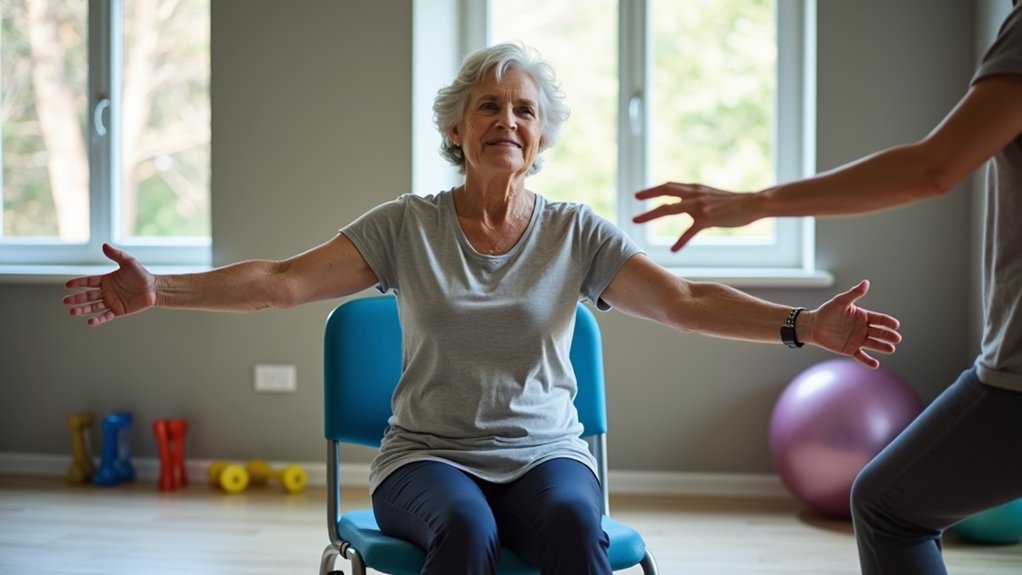
Since various health conditions can affect your exercise routine, it’s important to modify activities to match your specific needs and limitations. If you have arthritis, try water exercises to reduce joint stress. For those with osteoporosis, focus on weight-bearing activities while avoiding high-impact movements. When managing diabetes, monitor your blood sugar and exercise at consistent times daily.
If you’re dealing with heart conditions, start with short walking sessions and gradually increase duration. Those with balance issues can exercise while seated or holding onto stable support. Remember, you’re not alone – many in our community successfully adapt their workouts to stay active and healthy.
Tracking Progress and Measuring Success
To stay motivated and guarantee you’re making progress, tracking your fitness journey is essential. Join our community of active seniors who’ve discovered the power of measuring their success through simple yet effective methods.
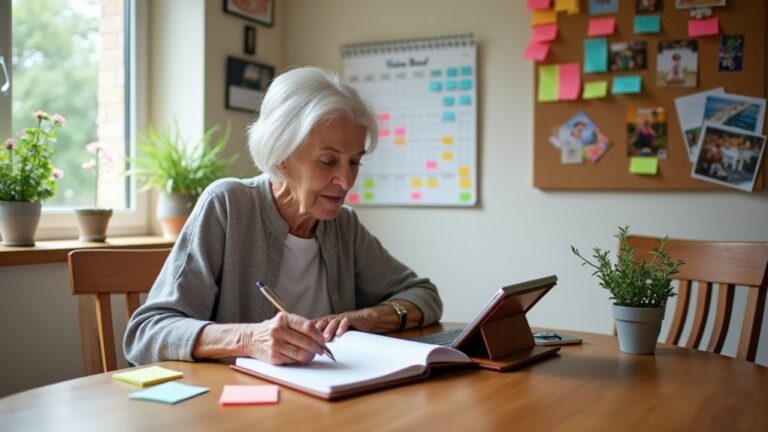
- Keep a workout diary to record your daily activities, including the type of exercise, duration, and how you felt
- Take monthly measurements of your flexibility, strength, and endurance using standard fitness tests
- Track your daily step count with a pedometer or fitness tracker watch
- Document your energy levels, mood, and sleep quality to understand how exercise impacts your overall well-being
Creating Social Support and Accountability Systems
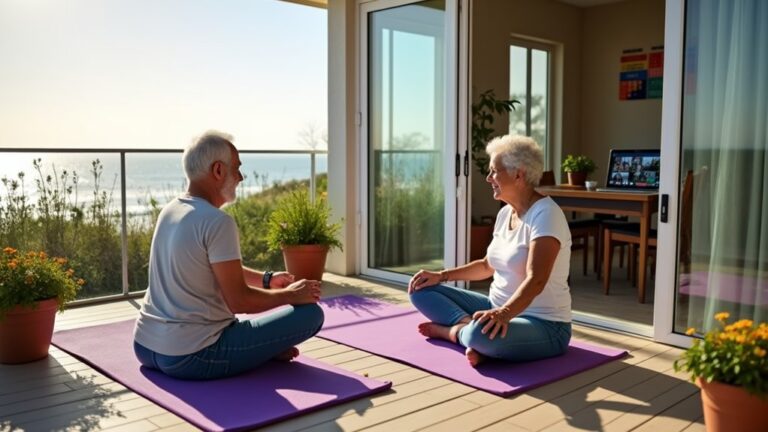
While exercise itself brings physical benefits, partnering with others can amplify your motivation and commitment to fitness. Join a local senior fitness class, find a walking buddy, or connect with family members who’ll check in on your progress. You’ll build meaningful relationships while staying accountable to your goals.
Consider using technology to expand your support network. Apps and online communities let you share achievements, track group challenges, and encourage fellow seniors. Your local community center or YMCA often offers group activities designed specifically for older adults, creating natural opportunities to form exercise friendships and maintain consistency.